
Benefits of Solar Energy in Pakistan: What Businesses Gain
By the EGS team. Updated 30 October 2026. 6 min read.
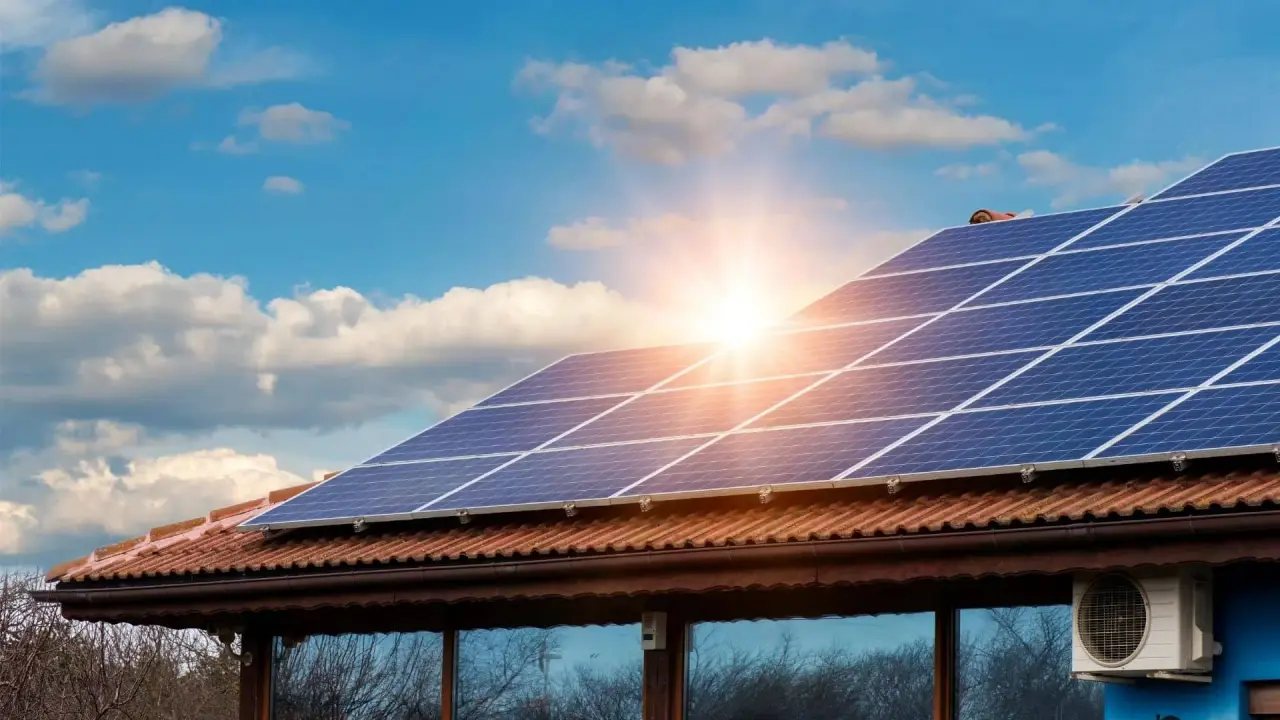
The benefits of solar energy in Pakistan show up in three places a business feels every month: fewer hours lost to load-shedding, a smaller electricity bill, and less money spent on generator fuel. This guide goes through each benefit for shops, offices, schools, factories and farms, then covers the limits you should know before you buy equipment.
Why the benefits of solar energy in Pakistan are large for businesses
Most of Pakistan gets strong sunshine for much of the year. As a rough guide, a solar system here produces about 120 to 140 units (kWh) per kW each month, depending on region and season. Most commercial buildings have flat concrete roofs or large sheds that are easy to mount panels on. Add a grid with regular outages and tariffs that keep being revised, and a rooftop system starts saving money from the first sunny day.
The climate also creates problems for solar. Summer heat above 45 °C in parts of Punjab, Sindh and Balochistan, dust, winter fog and smog in Punjab, and humid salt air in coastal cities such as Karachi and Gwadar all cut panel output if the system is badly designed or never cleaned. Your installer should plan for these from day one, and the equipment you choose should be rated for heat and corrosion.
1. A lower electricity bill
Your bill from your DISCO (LESCO, IESCO, FESCO, MEPCO, GEPCO, PESCO, HESCO, K-Electric or another distribution company) is built from the units you use, plus adjustments such as the monthly fuel charge adjustment (FCA) and quarterly tariff adjustments, plus taxes and duties. Every unit your panels produce and you use directly is a unit you do not buy from the grid, along with the taxes and adjustments that would have been added on top of it.
The saving is biggest when your heavy loads run in daylight:
- Air conditioners in offices, showrooms and classrooms on summer afternoons
- Water pumps, tube-wells and motors
- Shops, clinics and offices open during the day
- Factory machines on a day shift
Units you do not use at the moment they are produced can be exported to the grid. The old net metering scheme has been replaced for new connections by net billing under NEPRA's Prosumer Regulations 2026, where exported units are credited at a lower rate than you pay for imports. Read our net metering in Pakistan guide to see how the process works for you and your installer.
2. Power during load-shedding
Here the type of system matters. A standard on-grid system shuts down when the grid goes off. This is a safety requirement, so that no power flows back into lines utility staff may be working on. On-grid solar saves money but does not keep your lights on during an outage.
A hybrid system adds a battery, usually lithium iron phosphate (LiFePO4), and a hybrid inverter. When grid power cuts out, the inverter switches to the battery and the panels keep charging it in daylight. For businesses that cannot stop work, such as clinics, cold stores and factories with critical machines, this is often the main reason to go solar.
| System type | Cuts electricity bill | Runs during load-shedding | Needs batteries |
|---|---|---|---|
| On-grid | Yes | No | No |
| Hybrid | Yes | Yes, from battery and panels | Yes |
| Off-grid | Replaces grid supply | Not connected to grid | Yes |
Our on-grid vs hybrid comparison and lithium battery guide go into the trade-offs. For larger sites, a modular battery energy storage system such as the Sigenergy SigenStack can cover critical loads and evening peaks.
3. Less spending on generator fuel
Many shops, offices and factories across Pakistan run a diesel, petrol or gas generator through every outage. The real cost of that power is higher than the fuel bill alone once you add oil changes, servicing, repairs and the generator's own replacement.
You can work out your own generator cost per unit:
- Note how many litres the generator burns per hour at your usual load.
- Multiply by today's fuel price.
- Divide by the kilowatts it is actually supplying.
Compare that figure with what you pay your DISCO per unit. A hybrid solar system with storage cuts generator running hours, and at many sites the generator ends up as a rarely used backup.
4. More predictable energy costs
Once a solar system is running, the sunlight is free. Your running costs are panel cleaning, periodic checks and, eventually, inverter servicing, which you arrange with your installer or maintenance contractor. This gives you a stable share of your electricity that does not move when NEPRA approves a tariff revision or when the fuel adjustment goes up.
You will still buy some power from the grid, especially at night if you have no battery. But a large part of your consumption becomes a cost you already paid for upfront.
5. The strongest case: commercial, industrial and farm sites
Businesses use most of their power during working hours, which is exactly when panels produce. Warehouses and factories also have large roof areas that sit unused, and farms can replace diesel on tube-wells. That is why commercial, industrial and agricultural sites are among the strongest cases for solar in Pakistan.
See our pages on commercial solar, industrial solar and agricultural solar, or read solar system for factories in Pakistan.
6. A smaller carbon footprint
Pakistan's grid still relies heavily on fossil fuels, and generators burn diesel or petrol on site. Every unit of solar you use replaces some of that. For exporters, this matters because overseas buyers increasingly ask suppliers about their energy and emissions. Our guide on how to reduce carbon footprint with solar explains how to estimate it.
What solar will not do
The benefits of solar energy in Pakistan are real, but set your expectations correctly:
- On-grid systems give no backup. If load-shedding is your main problem, you need a hybrid system with batteries.
- Panels do not produce at night. Night loads come from the grid or a battery.
- Dirty panels produce less. Dust builds up quickly in most Pakistani cities, and coastal sites also collect salt. Budget for regular cleaning with your installer or a maintenance contractor.
- Export rules have changed. New connections fall under net billing, which values exported units lower. Size the system around what you use. Our article on the future of solar energy in Pakistan explains the change.
- Shading and weak roofs reduce output or add cost. Have your installer check the roof and shading before you finalise the equipment list.
How to get the most out of solar
- Start with your last 12 months of electricity bills so the system matches your real usage.
- Move heavy loads, such as pumps, washing and compressors, into daylight hours where you can.
- Choose quality equipment. EGS supplies Aiko solar panels, Sungrow inverters and the Sigenergy SigenStack battery system to businesses across Pakistan. Ask about delivery to your city.
- Use the inverter's monitoring app to spot drops in output early.
- Try our solar calculator for a first estimate of system size and products.
FAQs
Is solar still worth it in Pakistan now that net metering has changed?
For most commercial buildings, yes, because the biggest saving comes from units you use yourself, and those are not affected by the export rate. Net billing mainly reduces the value of surplus units sent to the grid, so systems should be sized closer to your own consumption.
Can a solar system run air conditioners?
Yes. Daytime AC load in offices, shops and classrooms during Pakistan's long summers is one of the best uses of solar. The inverter and panel capacity must be sized for the AC units' running and starting load. Send us your load list and we suggest inverter and panel sizes.
Does solar work during the monsoon, fog or cloudy days?
Panels still produce on cloudy days, but output drops. Monsoon cloud and, in Punjab, winter fog and smog can lower production for weeks at a time. Size the system on a full year of output rather than one summer month, and use batteries to smooth out short gaps.
How long do solar panels last?
Quality panels are built to work for decades, and they come with the manufacturer warranty. Ask us for the datasheet of the exact model you are considering.
Will solar keep my business running during load-shedding?
Only a hybrid or off-grid system with batteries will keep power on during outages. A plain on-grid system turns off when grid power goes off.
Get a quote for panels, inverters and batteries
Know what you need, or want help choosing? Send us your load or latest electricity bill and we suggest the products, with today's price. Get a quote or ask for today's price on WhatsApp. You can also size a system first with the solar calculator.