
On Grid vs Hybrid Solar System: Which Suits Your Business in Pakistan?
By the EGS team. Updated 30 October 2026. 7 min read.
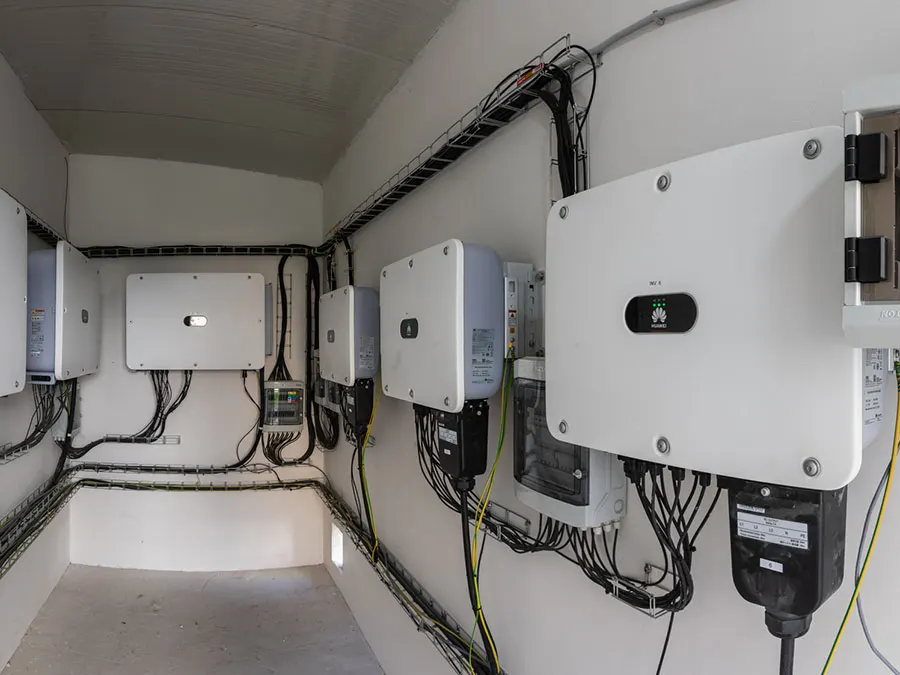
On grid vs hybrid solar system is the first real choice every business in Pakistan faces when it goes solar, and it decides both the upfront cost and what happens when your DISCO cuts the power. An on-grid system is cheaper and simpler. A hybrid system costs more but keeps selected loads running during load-shedding and lets you store solar for the evening. Here is how a shop, office, clinic, school, factory or farm should choose, with the 2026 net billing rules in mind.
On grid vs hybrid solar system: the short answer
- On-grid suits you if your supply is fairly stable, your main goal is a lower bill, and most of your electricity use happens during daytime working hours.
- Hybrid suits you if you face regular load-shedding, run important loads in the evening, or want to keep more of your solar for your own use instead of exporting it.
Both use the same solar panels. The difference is the inverter, and whether battery storage is added.
How an on-grid solar system works
An on-grid (grid-tied) system connects your panels to an on-grid inverter, which feeds power into your building's wiring alongside the grid supply from your DISCO. During the day, solar runs your loads first. Any extra goes to the grid, and after sunset you draw from the grid as usual.
One point surprises many buyers: an on-grid inverter switches off when the grid goes down, even if the sun is shining. This is a safety feature called anti-islanding. It stops your system from sending power into lines that utility staff may be working on. So during load-shedding, an on-grid system produces nothing.
Pros of on-grid
- Lowest upfront cost for a given system size
- Fewer parts to buy and maintain
- Highest efficiency, because there are no battery charging losses
- Straightforward to connect for net billing
Cons of on-grid
- No power during load-shedding, so the generator still runs
- Under net billing, exported units earn less than imported units cost
How a hybrid solar system works
A hybrid system uses a hybrid inverter, which can manage three sources at once: solar panels, battery storage and the grid. During the day, solar runs your loads and charges the battery. In the evening, the battery takes over. When the grid fails, the inverter switches to backup mode and keeps selected circuits running from solar and battery.
Most hybrid inverters can also run first without batteries, with storage added later. Backup during outages generally needs a battery, though, so "hybrid without battery" behaves much like on-grid in practice.
Pros of hybrid
- Power during load-shedding for the loads you choose
- Stores daytime solar for the evening peak
- Fewer generator running hours and less diesel
- Can be upgraded with more battery capacity later
Cons of hybrid
- Higher upfront cost because of the hybrid inverter and battery storage
- Batteries have a service life and will eventually need replacing
- Needs a cool, ventilated space for the battery system
Side-by-side comparison
| Feature | On-grid | Hybrid (with battery) |
|---|---|---|
| Works during load-shedding | No | Yes, for backed-up loads |
| Batteries | None | Lithium (LiFePO4) recommended |
| Upfront cost | Lower | Higher |
| Evening use of solar | No, imports from grid | Yes, from battery |
| Net billing with your DISCO | Yes | Yes |
| Upkeep | Panels and inverter | Panels, inverter and battery |
| Best for | Stable supply, daytime business hours | Load-shedding areas, evening or 24-hour operations |
| Indicative price (PKR) | Ask for today's price | Ask for today's price |
Prices change weekly. Ask for today's rate on WhatsApp.
Why net billing changes the math in 2026
Until early 2026, many buyers in Pakistan chose on-grid because net metering made exported units roughly as valuable as imported ones. That changed when NEPRA's Prosumer Regulations, 2026 came into force. Under the new net billing system, exported units are bought at a rate linked to the national average energy purchase price, while imported units are billed at your normal tariff (Business Recorder). Reports at the time put the new export rate at well below the earlier rate (pv magazine).
In plain terms, every unit you export now earns less than a unit you import costs. A hybrid system with battery storage lets you hold your midday surplus and use it after sunset instead of selling it cheap and buying it back at full price. For businesses with heavy evening load, such as restaurants, retail stores open till late, hospitals and clinics, or factories on a second shift, that can shorten the payback gap between hybrid and on-grid.
That does not make hybrid right for everyone. An office or workshop that runs mainly 9 to 5 may still get the best return from an on-grid system sized to its daytime load. Our net metering in Pakistan guide explains the billing in more detail.
Hybrid solar system price in Pakistan
The hybrid solar system price in Pakistan depends on three things:
- Panel capacity (kW), which costs the same as for an on-grid system of that size.
- Hybrid inverter size and brand. Hybrid inverters cost more than on-grid inverters of the same rating.
- Battery capacity (kWh) and chemistry. This is usually the biggest variable.
| Hybrid system size | Typical business | Battery storage | Price (PKR) |
|---|---|---|---|
| 10 kW | Shop, clinic or small office | Sized to backup load | Ask for today's price |
| 20 to 30 kW | School, larger office, restaurant | Sized to backup load | Ask for today's price |
| 50 kW | Small factory, cold store, commercial building | Sized to load and outage hours | Ask for today's price |
| 100 kW and above | Factory, warehouse, multi-floor commercial | Sized from a load study | Ask for today's price |
Prices change weekly. Ask for today's rate on WhatsApp.
You can lower the hybrid price by backing up only essential circuits: lighting, fans, IT and networking, POS terminals, refrigeration and perhaps one or two ACs. Backing up the whole building, including every AC and heavy motor, needs much more storage.
For a cost breakdown at the smaller end, see our 10kW solar system price in Pakistan guide.
What about off-grid?
An off-grid system has no connection to the grid at all. Solar and batteries carry the full load, day and night. In Pakistan, this makes sense mainly for remote sites, farms and tube wells where the grid is weak or absent. See our agricultural solar page for that use. For shops, offices and factories in towns and cities, on-grid or hybrid is almost always the better fit.
Equipment EGS supplies for on-grid and hybrid systems
EGS is a solar equipment supplier. For both system types we supply Aiko solar panels and Sungrow inverters, in on-grid and hybrid models. Sungrow inverters come with app-based monitoring, so you can see daily generation, battery charge and grid import from your phone. For commercial and industrial storage, we supply Sigenergy SigenStack, a modular LiFePO4 battery system built from stackable modules.
When you plan a hybrid system, check that the battery is on the inverter maker's compatibility list. A mismatched battery can cause communication errors or poor charging. SigenStack is designed to run with Sigenergy's own commercial hybrid inverter, so ask us for the complete configuration for your load. Installation is done by your own installer or EPC contractor.
Local factors that affect your choice
- Load-shedding pattern. Areas with long scheduled outages get far more value from hybrid. Check your DISCO's schedule for your feeder.
- Heat. Summer temperatures above 45 °C in Punjab, Sindh and Balochistan make inverters and batteries lose efficiency and age faster. Place them in a shaded, ventilated spot, never in direct sun on the roof.
- Winter fog and smog. In much of Punjab, solar output drops for weeks in winter, so a battery sized on summer output may not fill on those days.
- Salt air and humidity. Coastal sites such as Karachi and Gwadar see faster corrosion. Enclosures and terminals need proper sealing.
- Cold. In the north, cold winters affect battery charging. Check the operating temperature range on the battery datasheet.
- Generator use. If you already run a generator, a hybrid system can cut fuel use, but integration needs a proper changeover design from your installer.
How to decide in four questions
- How many hours of load-shedding does your area get each day?
- What share of your electricity do you use after sunset?
- Which loads must keep running during an outage?
- What budget do you have now, and could you add battery storage later?
If outages are rare and your use is mostly daytime, start with on-grid. If outages are regular or your evenings are heavy, go hybrid. If you are unsure, a hybrid inverter without batteries keeps the door open.
Get a quote for on-grid and hybrid options
The right choice depends on your bills, your feeder and your opening hours. Send us a year of electricity bills, your outage hours and the loads you need backed up on WhatsApp, and we will suggest panels, an inverter and storage for both on-grid and hybrid, with today's prices side by side. You can also use our request a quote form or try the solar calculator first. We supply businesses across Pakistan; ask about delivery to your city.
FAQ
Does an on-grid solar system work during load-shedding?
No. On-grid inverters shut down when the grid fails, for the safety of line workers. You need a hybrid inverter with a battery for backup.
Can I convert my on-grid system to hybrid later?
Usually yes, by replacing the on-grid inverter with a hybrid one or adding a storage system that works alongside it. The panels and structure stay. Send us your existing inverter model and system size and we can suggest options.
Is a hybrid solar system worth it for a business in Pakistan?
It is worth it if you face regular load-shedding, run a generator for long hours or use a lot of power in the evening. Under net billing, storing solar for your own evening use is often worth more than exporting it.
Can I get net billing with a hybrid system?
Yes. Hybrid systems can connect to net billing through your DISCO like on-grid systems, as long as the equipment meets the DISCO's interconnection requirements.
How long do hybrid system batteries last?
Lithium iron phosphate (LiFePO4) batteries typically last many years and thousands of cycles, depending on depth of discharge and temperature. Check the manufacturer's cycle rating and manufacturer warranty for the exact model.