
Lithium Battery for Solar: A LiFePO4 Storage Guide for Businesses in Pakistan
By the EGS team. Updated 30 October 2026. 8 min read.
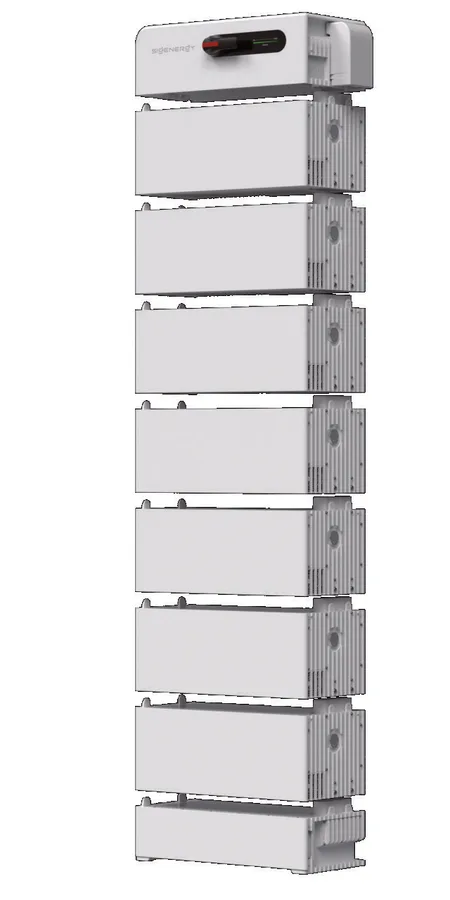
A lithium battery for solar stores the power your panels make at midday so your business can use it during load-shedding and after sunset. Across Pakistan, where long outages, generator diesel and evening tariffs all cost money, storage is often the part that decides whether a commercial solar system pays back as planned. This guide compares LiFePO4 with lead-acid, shows how a business sizes battery storage, and explains what drives the price of commercial battery storage in Pakistan.
EGS supplies Sigenergy SigenStack, a modular battery energy storage system for commercial and industrial sites. We do not sell standalone home batteries.
Why lithium batteries took over solar storage
For years, Pakistani shops and offices used lead-acid batteries with UPS units. They were cheap, but they needed water top-ups, lost capacity quickly in summer heat and rarely lasted long when drained deeply every day.
Lithium batteries, and specifically lithium iron phosphate (LiFePO4), changed that. They can be discharged much deeper, last far more cycles and need no routine water or terminal care. Most commercial battery energy storage systems sold today use LiFePO4.
LiFePO4 vs lead-acid: the comparison
Battery figures vary a lot by brand and model, and most published numbers come from manufacturers. The ranges below are typical values reported across industry sources (SolaX, Solar Technology). Always check the datasheet for the exact battery you are buying.
| Feature | LiFePO4 (lithium iron phosphate) | Lead-acid (flooded, AGM, gel) |
|---|---|---|
| Typical cycle life | Roughly 3,000 to 6,000 cycles | Roughly 300 to 800 cycles, depending on type |
| Usable depth of discharge | Around 80% to 100% | Around 50% recommended |
| Round-trip efficiency | Around 90% to 95% | Around 80% to 85% |
| Maintenance | None routine | Water top-up (flooded), terminal care |
| Weight for same usable energy | Much lighter | Heavier |
| Heat tolerance | Better, but still prefers a cool space | Ages quickly in high heat |
| Built-in management | Battery management system (BMS) | Usually none |
| Upfront cost | Higher | Lower |
What depth of discharge means for you
Depth of discharge (DoD) is how much of the battery's rated capacity you can use without damaging it. A 100 kWh lead-acid bank, used at a safe 50% DoD, gives you only about 50 kWh. A 100 kWh LiFePO4 system used at 90% gives you about 90 kWh. To get the same usable energy from lead-acid, you need nearly twice the rated capacity, and twice the floor space.
What cycle life means for you
One cycle is one full charge and discharge. A battery that cycles once a day uses about 365 cycles a year. At a few thousand cycles, a LiFePO4 battery can serve for many years of daily use. A lead-acid battery cycled daily and deeply may need replacing within a couple of years. Over the life of a solar system, lithium usually costs less per stored unit, even though it costs more on day one.
Why LiFePO4 and not other lithium types
LiFePO4 is more thermally stable than many other lithium chemistries, such as the nickel-based (NMC) cells used in many electric cars. That makes it a safer choice for indoor commercial sites and for summers that pass 45 °C in Punjab, Sindh and Balochistan. It also tends to offer longer cycle life. The trade-off is slightly lower energy density, which matters in phones and cars but not much in a battery room or along a warehouse wall.
How a business sizes a lithium battery for solar
Sizing starts with two questions: which loads must run, and for how long?
Step 1: list your backup loads
Write down the equipment you want running during load-shedding and its power in kW. Here is an example for a small factory or a large office floor:
| Load | Approx. power | Quantity | Total |
|---|---|---|---|
| LED lighting | 2 kW (whole floor) | 1 | 2 kW |
| IT, servers and networking | 1.5 kW | 1 | 1.5 kW |
| Cold room or chillers (average) | 3 kW | 1 | 3 kW |
| Inverter ACs (average) | 1.5 kW | 6 | 9 kW |
| Small motors and pumps | 2.5 kW | 1 | 2.5 kW |
| Total | about 18 kW |
These are rough figures. Read the nameplates on your own equipment, and remember that AC and refrigeration draw varies with heat and thermostat settings. Motors also pull a short surge at start-up, which the inverter has to handle.
Step 2: multiply by backup hours
If you need 3 hours of backup: 18 kW × 3 hours = 54 kWh of energy.
Step 3: allow for DoD and efficiency
Divide by the usable fraction. For LiFePO4 at about 90% DoD and 95% efficiency: 54 ÷ (0.9 × 0.95) ≈ 63 kWh of rated capacity.
For lead-acid at 50% DoD and 85% efficiency, the same load would need about 54 ÷ (0.5 × 0.85) ≈ 127 kWh of rated capacity.
Step 4: check the solar can recharge it
Storage is only useful if your panels can refill it before the next outage or evening. A 60 kWh battery needs a solar array large enough to charge it while also running daytime loads. As a rough guide, each kW of panels in Pakistan produces around 4 to 4.5 units a day on average (roughly 120 to 140 a month, depending on region and season), so this example site would need roughly 15 kW of panels just to refill the battery, on top of the panels covering its daytime load. Allow extra for winter fog and smog days in Punjab, when output drops.
Our solar calculator gives a first estimate for panels and storage.
Commercial battery storage: how SigenStack fits
Commercial and industrial storage is built differently from a small UPS battery. Instead of one fixed box, it is usually a set of battery modules that stack together, with a battery management system and an inverter that controls charging and discharging.
Sigenergy SigenStack follows this modular approach. Sigenergy describes it as stackable battery packs of about 12 kWh each, using LiFePO4 chemistry (Sigenergy, SigenStack datasheet). That means capacity can be chosen to match the load study, and more modules can be planned for later growth. SigenStack is designed to run with Sigenergy's own commercial hybrid inverter.
Typical uses on a business site:
- Load-shedding backup for production lines, cold storage, IT rooms, clinics and schools.
- Fewer generator hours, so less diesel and less generator wear.
- Evening use of daytime solar under net billing, where exported units earn less than imported units cost.
- Peak tariff relief for sites on time-of-use industrial tariffs.
The rule for any battery is simple: it must be compatible with the inverter that controls it. If the battery management system and inverter cannot talk to each other properly, charging and protection suffer. When you ask us for a SigenStack quote, we suggest the full configuration together.
Battery energy storage price in Pakistan
The price of battery energy storage in Pakistan depends on capacity, the number of modules, the inverter it runs with and the site's backup requirement.
| Storage size (approx.) | Typical site | Price (PKR) |
|---|---|---|
| Around 50 kWh | Office, clinic, school block, large shop | Ask for today's price |
| Around 100 kWh | Small factory, cold store, commercial building | Ask for today's price |
| Around 200 kWh and above | Factory, warehouse, multi-shift plant | Ask for today's price |
| Multiple stacks | Large industrial site | Ask for today's price |
Prices change weekly. Ask for today's rate on WhatsApp.
Like panels, most lithium batteries in Pakistan are imported, so prices follow the rupee-dollar rate and import taxes.
What makes a good lithium battery for solar
There is no single best lithium battery for solar for every business, but a good one should tick these boxes:
- LiFePO4 chemistry, clearly stated on the datasheet.
- Rated cycle life at a stated DoD and temperature, not just a headline number.
- A proper BMS that protects against overcharge, deep discharge, short circuit and high temperature.
- Compatibility with your inverter, confirmed by the manufacturer.
- Manufacturer warranty, with the terms in writing from the manufacturer.
- Traceable source. Ask for the brand, model and serial numbers on the invoice.
Where to place battery storage on a business site
Heat shortens battery life. Place the battery indoors or in a shaded, ventilated room, off the floor if flooding is a risk during monsoon, and away from direct sun. Keep the space dry, since humid, salty air at coastal sites can corrode terminals over time. In the north, check the datasheet's operating temperature range, since cold winters affect charging. Keep it clear of furnaces, boilers and other heat sources on a factory floor. Follow the manufacturer's installation manual, and leave the installation to your installer or EPC contractor.
Storage for factories and larger sites
Factories and warehouses use larger battery energy storage systems to cover outages, reduce generator running hours and use more of their own solar after sunset. These systems should be sized from a load study, not a rule of thumb. See our industrial solar page, the SigenStack battery storage page, and our guide on solar systems for factories.
Get a quote for battery storage
Storage sized by guesswork either runs flat during the outage or sits half-used for years. Send us your backup loads, outage hours and existing solar or inverter details on WhatsApp, and we will suggest a SigenStack configuration with today's price. You can also use the request a quote form. Datasheets are available on request. We supply businesses across Pakistan; ask about delivery to your city.
FAQ
How long does a lithium battery for solar last?
A good LiFePO4 battery is typically rated for several thousand cycles. With one cycle a day, that can mean many years of service, depending on depth of discharge, temperature and the specific model.
Can I use our old UPS batteries with a solar system?
You can connect some lead-acid batteries to some inverters, but old UPS batteries are usually too worn and too small for daily solar cycling. Most hybrid systems today are designed around lithium.
What size battery does a business in Pakistan need?
It depends on which loads must run during an outage and for how many hours. A list of loads in kW, multiplied by backup hours and adjusted for depth of discharge, gives the starting figure. Send us the list and we will suggest a size.
Does EGS sell home lithium batteries?
No. EGS supplies Sigenergy SigenStack, a modular battery energy storage system for commercial and industrial sites, along with Aiko panels and Sungrow inverters.
Is LiFePO4 safe for indoor use?
LiFePO4 is one of the more thermally stable lithium chemistries. It should be installed as the manufacturer instructs, with ventilation, proper cabling and protection, and away from heat sources.